

You’re standing in your garage, staring at a dark backyard. Or maybe you’re managing a parking lot that needs better visibility. Whatever the scenario, one question comes up: what type of flood light do I actually need? With so many options available, including LED, solar, motion-sensing, and color-changing models, it’s easy to feel overwhelmed. The right flood light doesn’t just brighten a space; it enhances safety, cuts energy bills, and lasts for years without hassle.
This guide cuts through the noise. You’ll learn the real differences between types of flood lights, how they work, where they shine, and which one fits your home, business, or project. No fluff, just clear, actionable insights based on performance, cost, and real-world use.
LED Floodlights: The Modern Standard
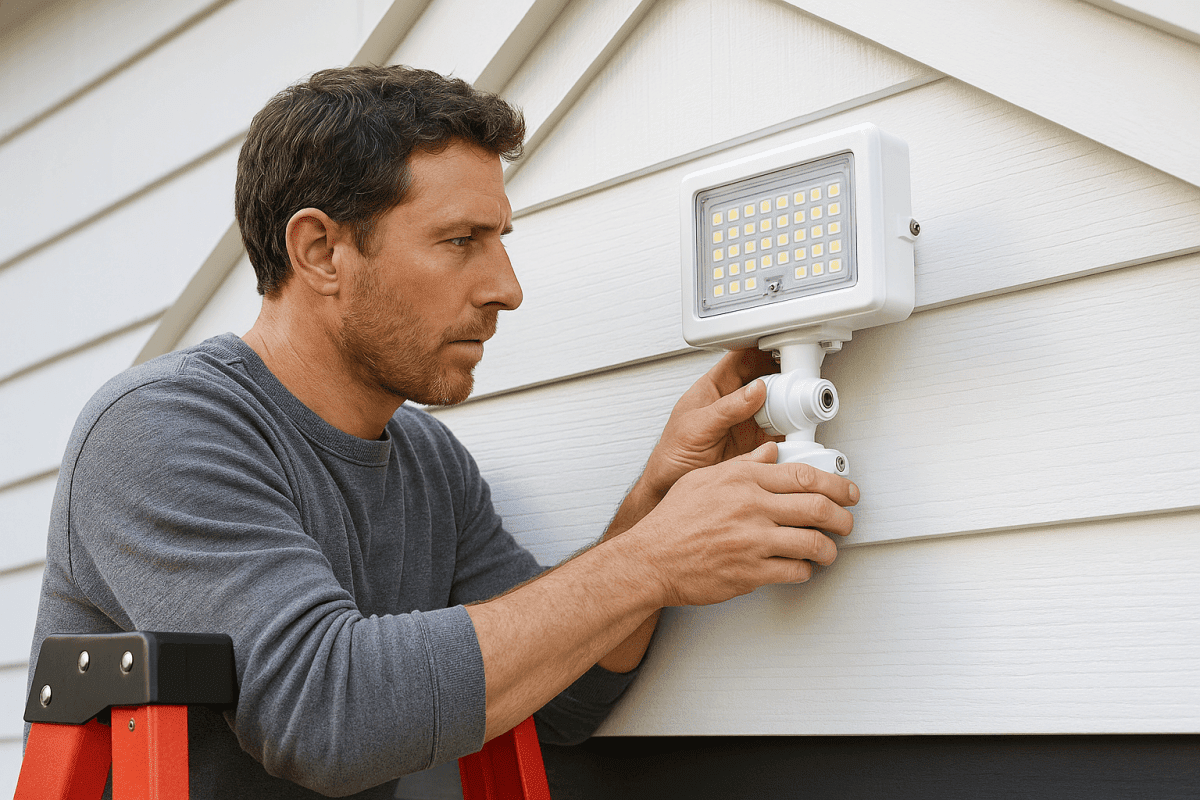
LED floodlights dominate today’s market for one simple reason: they outperform every other type in efficiency, lifespan, and versatility. If you’re upgrading or installing new lighting, LED should be your starting point.
Why LED Beats the Competition
LEDs convert most of their energy into light, not heat. That means up to 80% lower energy bills compared to incandescent or halogen lights. They also last 30,000 to 50,000+ hours, which equals over a decade with average use. Fewer replacements mean less maintenance, especially in hard-to-reach areas like high walls or warehouse ceilings.
Unlike older technologies, LEDs turn on instantly, work well in cold weather, and handle frequent switching without wear. Their low heat output also reduces fire risk near flammable materials.
Brightness and Color Options
LED floodlights cover a wide lumen range:
– 800 to 1,500 lumens: Ideal for porches, small yards, and garage entries.
– 3,000 to 6,000 lumens: Perfect for driveways, backyards, and commercial signage.
– 10,000 to 15,000+ lumens: Used in stadiums, large parking lots, and industrial sites.
Color temperature is just as customizable:
– 3000K to 4000K (Warm to Neutral): Creates a welcoming glow for homes.
– 5000K to 6500K (Cool White to Daylight): Sharp, clear light ideal for security cameras and task areas.
Where to Use LED Floodlights
- Residential security: Wall-mounted LED fixtures with motion sensors deter intruders.
- Commercial buildings: Dusk-to-dawn LED floodlights keep parking lots lit all night.
- Warehouses and workshops: High-bay LED floodlights provide uniform, flicker-free illumination.
- Architectural lighting: Slim, modern designs highlight facades and landscaping.
Halogen Floodlights: Bright but Outdated
Halogen floodlights were once the go-to for bright outdoor lighting. While still available, they’ve been largely replaced by more efficient options.
How Halogens Work
These lights use a tungsten filament surrounded by halogen gas. When electricity flows, the filament heats up and emits a bright, white light that closely mimics daylight. This makes them useful for tasks requiring accurate color rendering.
Wattage and Lumen Output
Common halogen floodlight ratings:
– 50W: 380 to 450 lumens, low output for small accent lighting.
– 60W: 850 to 1,070 lumens, often used indoors or in track lighting.
– 90W: 1,300 to 1,350 lumens, suitable for medium outdoor areas.
– 100W: 1,000 to 1,500 lumens, common for security lighting.
– 150W: 1,500 to 2,200 lumens, powerful beam for large zones.
Despite decent brightness, halogens waste most energy as heat, up to 90%. They also run extremely hot, posing burn and fire risks if installed near dry leaves or wooden structures.
Why They’re Fading Out
- Short lifespan: Lasts only 2,000 to 4,000 hours, far less than LEDs.
- High energy use: Costs more to operate over time.
- Frequent replacement: Bulbs burn out faster, increasing long-term labor and material costs.
Use halogens only if budget is tight and usage is minimal. For any long-term or high-use application, LED is the smarter choice.
HID Floodlights: Power for Large Areas

High-Intensity Discharge (HID) floodlights deliver massive brightness, making them ideal for large-scale applications where LED wasn’t always an option.
How HID Lights Work
HID lamps produce light by sending an electric arc through vaporized metal halide or sodium. This process generates intense illumination, measured at 90 to 100 lumens per watt, which is better than halogen but less efficient than modern LEDs.
Types of HID Lights
- Metal Halide: Emits crisp white light (5000K to 6000K), excellent for sports fields and stadiums.
- High-Pressure Sodium (HPS): Produces a yellow-orange glow, often used in street lighting and industrial yards.
Both types require a warm-up period of 3 to 5 minutes to reach full brightness. They also need time to cool before restarting, which limits their use with motion sensors.
Best Applications
- Sports arenas: Must meet broadcast and player visibility standards.
- Industrial yards: Lighting for loading docks, rail yards, and storage facilities.
- Large parking lots: Where maximum coverage is critical.
Downsides include shorter lifespan (2,000 to 3,000 hours), higher maintenance, and declining availability due to LED competition.
CFL Floodlights: Budget-Friendly Efficiency
Compact Fluorescent (CFL) floodlights offer a middle ground between halogens and LEDs for certain applications.
How CFL Floodlights Perform
CFL floodlights typically produce 900 to 1,700 lumens and last 7 to 13 years under normal usage. They provide moderate energy efficiency, though not at LED levels.
Key Limitation
These lights require a warm-up period of approximately 30 seconds to reach full brightness. This makes them unsuitable for motion-activated security but workable for residential areas and long burn times.
Incandescent Floodlights: Legacy Technology
Incandescent floodlights represent the oldest flood light technology still occasionally found in homes.
Why They’re Obsolete
These bulbs waste approximately 90% of energy as heat, converting only 10% into visible light. They produce 600 to 1,200+ lumens and last just 6 to 12 months with 4 hours of daily use.
While they create a warm, natural glow, their poor energy performance and frequent replacement needs have made them increasingly obsolete. Most users have moved to LED or CFL alternatives.
Solar-Powered Floodlights: Off-Grid Efficiency

For areas without easy access to electrical wiring, solar-powered floodlights offer a clean, cost-effective solution.
How They Work
These units come with built-in solar panels that charge internal batteries during the day. At night, the stored energy powers the LED lights. Most models include motion sensors or dusk-to-dawn controls.
Key Benefits
- Zero electricity cost: After installation, they run on free solar energy.
- Easy DIY setup: No trenching, wiring, or electrician needed.
- Eco-friendly: Reduce carbon footprint and grid dependence.
- Reliable in remote areas: Perfect for pathways, sheds, fences, and rural properties.
Performance Factors
- Sunlight exposure: Needs direct sun for 6 to 8 hours daily for full charge.
- Battery life: Rechargeable batteries last 2 to 5 years before replacement.
- Brightness: Typically 500 to 2,000 lumens, enough for residential security but not large commercial areas.
Choose solar floodlights when wiring is impractical or you want a quick, green upgrade.
Motion-Activated Floodlights: Security on Demand
One of the most effective ways to deter intruders is sudden, bright light. Motion-activated floodlights deliver exactly that.
How They Detect Movement
Most use PIR (Passive Infrared) sensors that detect body heat and movement within a range of 20 to 30 feet. Advanced models offer adjustable sensitivity, time delay (30 sec to 10 min), and coverage angles (up to 270°).
Why They Save Energy
These lights stay off until triggered. This means:
– Lower power consumption
– Extended bulb life
– Less light pollution
Ideal for driveways, back doors, garages, and dark corners where unexpected activity needs attention.
Smart Integration
Many modern motion lights connect to:
– Wi-Fi or smart hubs (Alexa, Google Home)
– Security cameras (trigger recording on motion)
– Mobile alerts (notify you of movement)
This turns a simple light into part of a smart home security system.
Dusk-to-Dawn Floodlights: Set and Forget
If you want consistent nighttime lighting without manual control, dusk-to-dawn floodlights are the answer.
How They Work
Equipped with photocells, these lights automatically turn on at sunset and off at sunrise. No programming or switches needed.
Best Uses
- Perimeter lighting: Keeps building exteriors visible all night.
- Pathways and walkways: Prevents trips and falls.
- Parking lots: Ensures safety from dusk to dawn.
- Backyard lighting: Provides ambient security without motion triggers.
Available in LED, halogen, and HID, but LED is preferred for efficiency and longevity.
Avoid Light Pollution
Use shielded fixtures that direct light downward. This complies with dark sky regulations and prevents glare or neighbor complaints.
RGB Color-Changing Floodlights: Lighting with Style
Need more than just white light? RGB floodlights let you customize colors for mood, events, or branding.
How They Work
These LED lights combine red, green, and blue diodes to produce millions of colors. Control options include:
– Remote controls
– Smartphone apps
– Voice assistants
– Timers and music sync
Creative Applications
- Holiday displays: Red and green for Christmas, orange for Halloween.
- Architectural accenting: Highlight columns, eaves, or pools in dynamic colors.
- Events and parties: Match lighting to themes or music.
- Business branding: Use company colors on building exteriors.
Many models also offer white light modes (warm, neutral, cool), making them functional year-round.
Bulb Shapes: R, MR, BR, and PAR Explained
Floodlight bulbs are categorized by shape and reflector design, each suited to different applications.
R Bulbs (Reflector)
- Design: Basic reflector shape with a rounded front.
- Use: Older indoor fixtures; mostly outdated.
- Example: R20 = 2.5-inch diameter (20/8 inches).
MR Bulbs (Multifaceted Reflector)
- Design: Small, bowl-shaped with mirrored facets inside.
- Use: Landscape lighting, track lights, under-cabinet fixtures.
- Common Size: MR16 (2-inch diameter).
BR Bulbs (Bulged Reflector)
- Design: Wider, flared shape that spreads light softly.
- Use: Recessed ceiling cans, indoor track lighting.
- Advantage: Reduces glare compared to PAR.
PAR Bulbs (Parabolic Aluminized Reflector)
- Design: Heavy glass lens with precise beam control.
- Durability: Weather-resistant; ideal for outdoor security.
- Beam Precision: Narrow spot to wide flood options.
- Common Sizes: PAR30, PAR38 (used in outdoor sockets).
Pro Tip: For outdoor durability and focused light, PAR bulbs are best. For indoor soft spread, choose BR.
Choosing by Brightness, Color, and Beam Angle
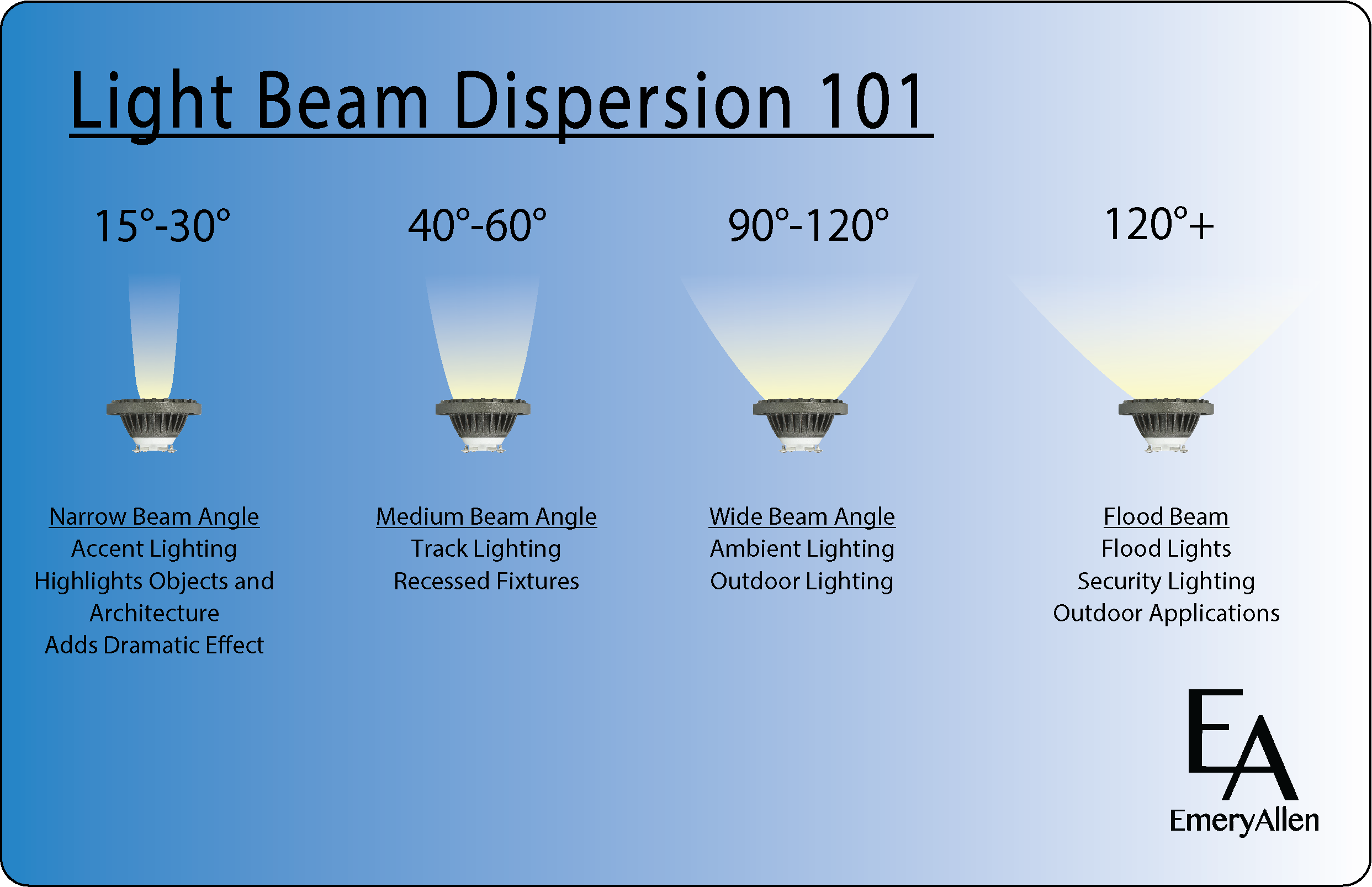
Technical specs determine how well a floodlight performs in your space.
Brightness (Lumens, Not Watts)
- 700 to 1,500 lumens: Residential yards, patios, entryways.
- 3,000 to 6,000 lumens: Driveways, garages, small commercial areas.
- 10,000+ lumens: Parking lots, stadiums, industrial sites.
Remember: More lumens aren’t always better. Excessive brightness causes glare and light trespass.
Color Temperature (Kelvin)
- 3000K to 4000K: Warm to neutral, cozy, inviting (homes).
- 5000K to 6500K: Cool white to daylight, sharp, alert (security, garages).
Security tip: 5000K+ improves facial recognition and camera clarity.
Beam Angle
- Narrow (15° to 30°): Spotlight effect for highlighting trees, signs, or statues.
- Wide (60° to 120°): Broad coverage for entire driveways or backyards.
Use adjustable fixtures to fine-tune beam direction and spread.
Weatherproofing and Durability: IP Ratings Matter
Outdoor floodlights must survive rain, snow, dust, and temperature swings.
What Is IP Rating?
The Ingress Protection (IP) code tells you how well a fixture resists water and dust. Example: IP65 means:
– 6: Dust-tight
– 5: Protected against low-pressure water jets
Minimum for outdoors: IP65
Best for harsh conditions: IP66 or IP67 (heavy rain, coastal areas)
Build Quality
Look for:
– Aluminum or stainless steel housings
– Powder-coated finishes (black, bronze, gray)
– Rubber gaskets around lenses
Industrial models often come in high-visibility yellow for safety zones.
Where to Install Each Type
Residential Use
- Front/back doors: LED motion lights (1,000 to 2,000 lumens, 5000K)
- Landscaping: Solar or low-voltage LED with narrow beams
- Garages and driveways: Dusk-to-dawn LED floodlights (3,000+ lumens)
- Decorative lighting: RGB LEDs for seasonal or architectural effects
Commercial Use
- Parking lots: High-lumen LED or HID with dusk-to-dawn sensors
- Building exteriors: Corrosion-resistant LED wall packs (black or bronze)
- Signage: BR30 or PAR38 LEDs to spotlight logos
Industrial Use
- Warehouses: High-bay LED floodlights (10,000+ lumens, 5000K)
- Loading docks: Durable PAR fixtures with wide beams
- Yards and perimeters: Motion-activated or dusk-to-dawn with high IP ratings
Sports and Recreation
- Tennis courts, fields: LED or HID with precise beam control
- Compliance: Must meet sports organization standards for uniformity
- Color temp: 5000K+ for player safety and broadcast quality
Cost vs. Long-Term Value
Upfront Cost Comparison
- Incandescent: $5 to $10 (cheapest, but costly long-term)
- Halogen: $10 to $20
- CFL: $15 to $25
- LED: $20 to $100+
- Solar: $30 to $150 (includes panel and battery)
Long-Term Savings
- LEDs save up to 80% on energy
- Last 10 to 20x longer than incandescent
- Fewer replacements equal lower labor costs
Example: A $30 LED bulb used 4 hours/day saves $100+ in electricity over 10 years vs. halogen.
Legal and Safety Tips
Avoid Neighbor Conflicts
- Don’t aim lights directly at windows
- Use shields or louvers to control spill
- Follow local ordinances on brightness and timing
Fire and Electrical Safety
- Keep halogen/incandescent away from combustibles
- Use GFCI outlets for outdoor hardwired lights
- Ensure proper IP rating to prevent short circuits
Frequently Asked Questions About Types of Flood Lights
What is the most energy-efficient type of flood light?
LED floodlights are the most energy-efficient option, consuming up to 80% less energy than incandescent or halogen lights. They convert most energy into light rather than heat and last 30,000 to 50,000+ hours.
How many lumens do I need for a backyard flood light?
For residential backyards, 700 to 1,500 lumens is typically sufficient. Driveways and larger yards may need 3,000 to 6,000 lumens for adequate coverage and security.
Are solar flood lights bright enough for security?
Solar flood lights typically produce 500 to 2,000 lumens, which works well for residential security. However, they may not provide enough brightness for large commercial areas or professional security applications.
What IP rating do outdoor flood lights need?
Outdoor flood lights should have a minimum IP65 rating, which indicates dust-tight construction and protection against low-pressure water jets. For harsh environments, IP66 or IP67 provides better protection.
Can I use halogen flood lights for security?
Yes, but halogen flood lights are inefficient and have short lifespans (2,000 to 4,000 hours). For long-term security lighting, LED flood lights with motion sensors offer better performance, lower energy costs, and longer service life.
What color temperature is best for security lighting?
Color temperatures of 5000K to 6500K (cool white to daylight) are best for security lighting. They improve facial recognition, enhance camera clarity, and create a sharper, more alert appearance that deters intruders.
Key Takeaways for Choosing the Right Flood Light
Choosing the right type of flood light comes down to purpose, location, and control needs. For most users, LED floodlights offer the best balance of brightness, efficiency, and lifespan. Add motion sensors for security, dusk-to-dawn for convenience, or RGB for style. Use PAR bulbs for outdoor durability, aim for 5000K+ in security zones, and always check IP ratings before installing outdoors.
Start by identifying your primary need: security, aesthetics, or general illumination. Then match the technology (LED, solar, HID), brightness (lumens), and color temperature to your specific space. Whether you’re lighting a backyard or a warehouse, the right floodlight keeps spaces safe, visible, and efficient year after year.