

Choosing the wrong outdoor flood light bulb type can leave your yard dim, your energy bill high, and your security weak. With so many options available, from LEDs to halogens to solar, it’s hard to know which one truly fits your space and budget.
This guide breaks down every major flood light bulb type, compares real performance data, and matches each option to specific outdoor applications. You’ll learn which bulbs save the most on electricity, which last decades without replacement, and how smart, motion-activated, or solar features fit into modern setups.
LED Flood Lights: The Modern Performance Leader
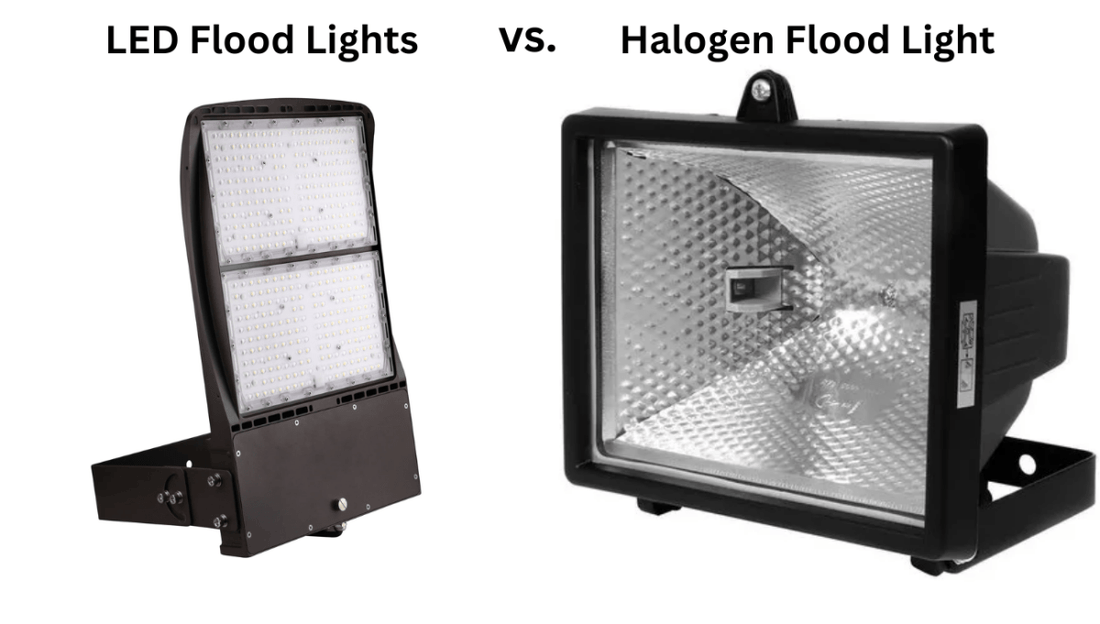
LEDs now dominate the outdoor lighting market because they outperform nearly every alternative in efficiency, lifespan, and versatility.
Why LEDs Outperform Other Bulb Types
LED flood lights convert up to 90% more energy into light than halogen equivalents. A 30W LED can produce 2,700 lumens, the same brightness as a 300W halogen. With lifespans reaching 50,000 hours, LEDs may never need replacement during their operational life in a typical home setup.
Unlike fluorescent bulbs, LEDs contain no mercury and are easier to recycle. They also work flawlessly in cold weather and tolerate frequent on/off cycling, making them ideal for motion-activated fixtures.
Brightness and Wattage Guide for LED Flood Lights
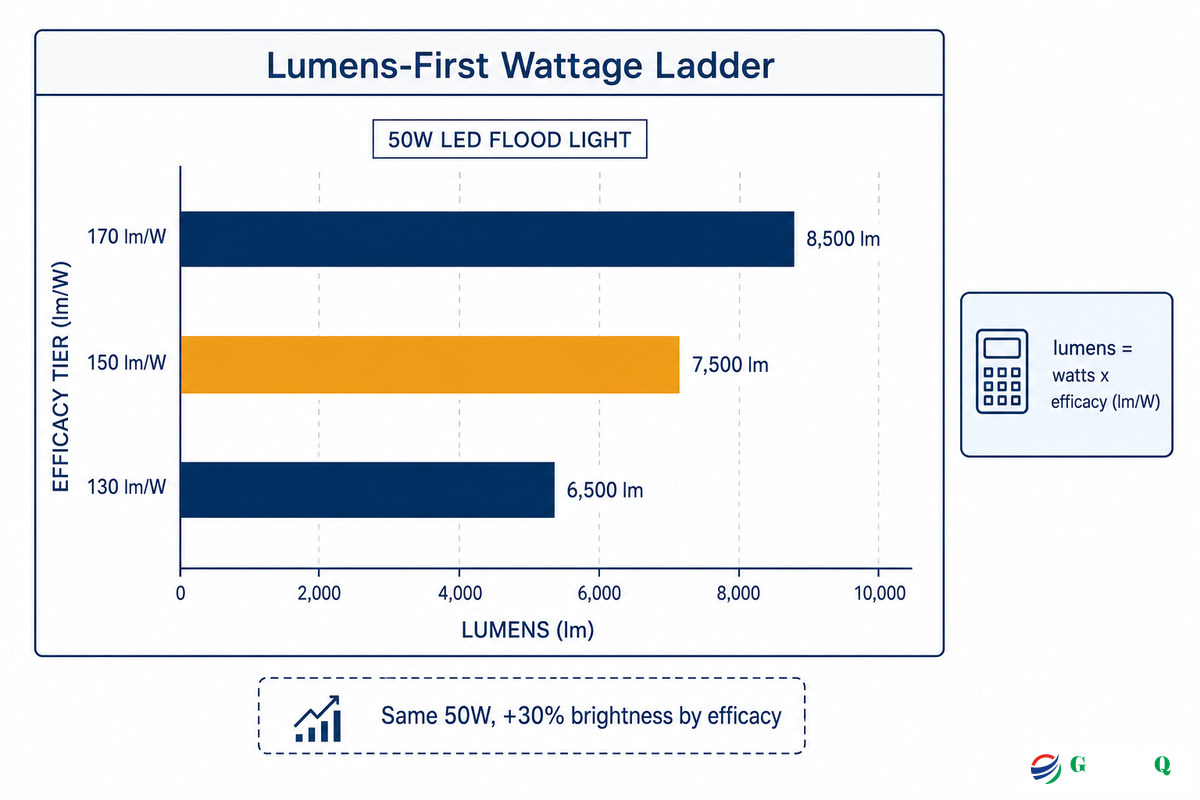
Choosing the right LED wattage depends on the area you need to illuminate:
| LED Wattage | Lumens | Best For | Coverage Area |
|---|---|---|---|
| 5W | 400 | Doorways, steps | 5m x 5m |
| 10W | 750 | Patios, walkways | 10m x 10m |
| 20W | 1,500 | Driveways, decks | 15m x 15m |
| 30W | 2,200 | Small gardens | 20m x 20m |
| 50W | 4,000 | Medium gardens | 30m x 30m |
| 100W | 8,000 | Large yards, parking | 50m x 50m |
| 150W | 16,000 | Parking lots | 75m x 75m |
High-output models like the SANSI 45W (6,000 lumens) replace 150W halogens while using 70% less energy, making them perfect for full-yard security lighting.
Smart Features and Color Control
Many LED flood lights support smart home integration via Wi-Fi or Bluetooth. The GE CYNC Smart Outdoor bulb ($38–$50) offers app control, voice commands through Alexa and Google Assistant, and millions of color options. The Philips Hue Calla ($137) adds dynamic color-changing for landscape design but requires a Hue Bridge for full functionality.
Smart LEDs allow you to:
– Schedule on/off times
– Control lights remotely from a smartphone
– Automate lighting with security cameras
– Group multiple lights for unified control
Some users may experience occasional app lag, but the convenience typically outweighs minor glitches.
Halogen Flood Lights: Bright but Increasingly Outdated
Halogen bulbs deliver intense light but fall short in efficiency and lifespan compared to modern alternatives.
When Halogen Still Makes Sense
Halogens produce bright, crisp white light with excellent color rendering, making them suitable for motion-sensor security lights where instant, high-intensity illumination is critical. However, they consume roughly 10 times more power than LEDs for the same brightness. A 100W halogen produces about 900 lumens, equivalent to a 10W LED.
These bulbs are being phased out due to poor efficiency but remain in older fixtures or budget installations.
Key Drawbacks of Halogen Bulbs
- Short lifespan: 2,000 to 5,000 hours versus 50,000 for LEDs
- High heat output creates burn hazards and increased fire risk
- Frequent replacements add up over time
- Fragile filaments are sensitive to vibration and impact
While cheap upfront (under $10), halogens cost significantly more in energy and maintenance over their lifetime.
Metal Halide Flood Lights: Built for Large Venues
Metal halide bulbs are powerful but outdated for most residential and small commercial uses.
Industrial and Stadium Applications
These lights emit bright white light with excellent color accuracy, making them ideal for sports arenas, stadiums, and large industrial yards. However, they take several minutes to reach full brightness, consume significant energy, and degrade faster than LEDs.
With LEDs now matching or exceeding their brightness and efficiency, metal halide is no longer recommended for new installations.
High-Pressure Sodium Flood Lights: The Orange Parking Lot Glow
HPS lights are known for their warm yellow or orange output and long-standing use in public infrastructure.
Where HPS Bulbs Are Still Found
Commonly installed in streetlights, parking lots, and warehouse perimeters, HPS bulbs are efficient and long-lasting but inferior to modern LEDs. Their low color rendering makes them unsuitable where accurate color perception matters.
While still functional, they are being rapidly replaced by LED alternatives due to better control options, whiter light, and lower maintenance demands.
Compact Fluorescent Flood Lights: Fading from the Market
CFLs were once a go-to for energy savings but are now obsolete for outdoor flood lighting.
Limited Outdoor Use Today
CFL flood lights offer moderate efficiency but contain mercury, requiring special disposal procedures. They perform poorly in cold weather and degrade quickly with frequent switching, which is common in motion-activated setups.
Most manufacturers have shifted production to LED, making CFLs a rare and outdated choice for outdoor applications.
Solar-Powered Flood Lights: Wire-Free and Eco-Friendly
Solar lights offer off-grid convenience with zero electricity costs.
How Solar Flood Lights Operate
These units feature built-in solar panels and rechargeable batteries. They charge during the day and turn on automatically at night via a photocell sensor. They are ideal for renters or locations without outdoor wiring access.
Popular models like the Beams MB360XT ($12–$20) are battery-powered and wireless, installing in under 10 minutes with just a drill.
Limitations of Solar Flood Lights
- Sunlight-dependent: Performance drops in cloudy climates or shaded areas
- Battery degradation: Capacity declines noticeably after 2 to 3 years
- Lower brightness: Typically under 1,000 lumens
- Panel maintenance: Must be cleaned regularly for optimal charging
Solar options work best for pathways, garden borders, or temporary setups rather than primary security lighting.
Incandescent Flood Lights: Avoid for Outdoor Use
Traditional incandescent bulbs are obsolete for outdoor flood lighting applications.
Why Incandescent Is Not Recommended
- Extremely inefficient, with most energy lost as heat
- Short lifespan under 1,000 hours
- High long-term energy costs
- Rarely found in modern flood fixtures
You may only encounter them in vintage or decorative fixtures, and they are never ideal for area flooding.
Choose by Activation Method: Motion, Dusk-to-Dawn, or Smart
The way your light turns on matters as much as the bulb type itself.
Motion Sensors: Best for Security
Passive Infrared (PIR) sensors detect movement and trigger lights instantly. Top models include:
– SANSI: 50-foot detection range with adjustable sensitivity
– Leonlite: Twin-head design, 1,800 lumens, minimal false alarms from small animals
– Beams MB360XT: Wireless, battery-powered, 35-foot detection range
Motion sensors save energy and deter intruders with sudden illumination.
Dusk-to-Dawn: Set-and-Forget Lighting
Photocell sensors detect ambient light and turn lights on at sunset, off at sunrise. No scheduling needed.
The Sengled Dusk to Dawn bulb ($14 for a 3-pack) delivers 1,200 lumens with a 5000K daylight glow. It is ideal for porches, garages, or perimeter lighting. Just screw it in and forget about it.
Smart Integration: Full Control from Your Phone
Smart bulbs like GE CYNC and Philips Hue offer app-based on/off and dimming, voice control, automation triggers (such as turning on when a camera detects motion), and color customization.
These require Wi-Fi and, in Hue’s case, a bridge. They are best for tech-savvy users wanting full customization.
Match the Light to Your Outdoor Space
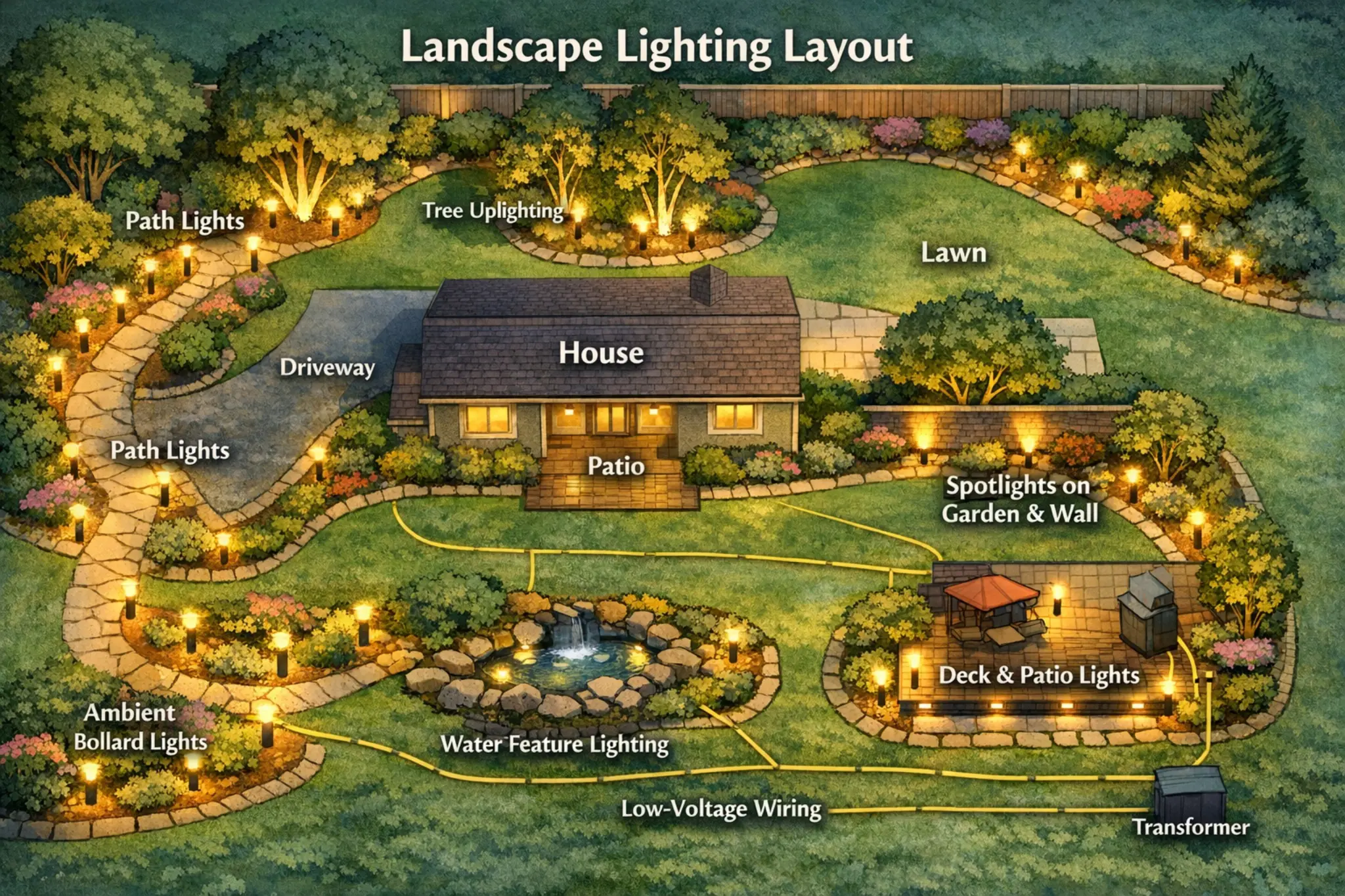
The right bulb depends on where and why you are lighting an area.
Pathways and Walkways
Use 5W to 10W LEDs (400 to 750 lumens) for soft, safe illumination. The Philips Hue Calla adds color for landscaping flair. Solar path lights are also effective in these spaces.
Driveways and Decks
Go for 20W to 30W LEDs (1,500 to 2,200 lumens). Pair them with motion sensors like the Leonlite 20W twin-head for security and convenience.
Large Yards and Parking Lots
Choose 50W to 150W LEDs (4,000 to 16,000 lumens). The SANSI 45W (6,000 lumens) covers a 50×80 ft backyard. For commercial lots, 100W+ LEDs replace 400W HPS fixtures effectively.
Renters and Temporary Setups
Battery-powered Beams spotlights or solar lights require no wiring. Install them in minutes and take them with you when you move.
Key Specs to Compare: Lumens, Color, Beam, and IP Rating
Understanding technical specs ensures optimal outdoor performance.
Lumens Measure Brightness
More lumens means brighter light. Use this quick guide:
– 400 to 800 lumens: Entryways, steps
– 1,500 to 2,200 lumens: Driveways, patios
– 4,000 to 6,000+ lumens: Security, large areas
Color Temperature: Warm vs. Cool
Measured in Kelvins (K):
– 2,700K: Warm white, cozy and ambient for patios
– 4,000K to 5,000K: Cool white or daylight, sharp and alert for security and driveways
– 6,500K+: Blue-white, industrial use in warehouses
Smart bulbs let you switch between tones on demand.
Beam Angle: Spread vs. Focus
- Narrow beam (25° to 40°): Spotlighting trees, signs, or architectural features
- Wide beam (90° to 120°): General yard coverage
- Adjustable heads: Customize direction with models like Leonlite and SANSI
IP Rating: Weatherproofing Matters
Essential for outdoor durability:
– IP65: Dust-tight and protected from water jets, ideal for rain exposure
– Wet-rated: Withstands direct exposure in uncovered fixtures
– Damp-rated: Needs cover, suitable for porches and eaves
Always check gaskets and seals after major storms.
Installation: Hardwired vs. Wireless
Your setup depends on available power and wiring access.
Hardwired Fixtures
Hardwired fixtures require an electrical connection to a junction box. They are used for SANSI, Leonlite, and GE CYNC models in permanent, high-power installations.
Professional installation is recommended if you lack electrical experience.
Plug-In and Battery Options
- Plug-in: Use with outdoor outlets (Philips Hue)
- Battery: Beams MB360XT requires no wiring and is fully portable
- Solar: Self-sustaining and eco-friendly
These options are ideal for DIYers and temporary setups.
Maintenance and Longevity Tips
Keep your outdoor flood lights performing at their best with simple upkeep.
Lifespan by Bulb Type
- LED: Up to 50,000 hours (roughly 17 years at 8 hours per night)
- Halogen: 2,000 to 5,000 hours (roughly 1 to 2 years)
- Incandescent: Under 1,000 hours
LEDs rarely need replacement in typical residential use.
Cleaning and Inspection
- Wipe covers with a damp cloth every 3 to 6 months
- Clean solar panels monthly for full charging
- Check seals and gaskets for cracks or water intrusion
- Tighten screws on moving or adjustable parts
For smart lights, update firmware and resync apps as needed.
LED vs. Halogen: Final Comparison

| Feature | LED | Halogen |
|---|---|---|
| Energy Use | 90% less | High |
| Lifespan | 50,000 hrs | 2,000 to 5,000 hrs |
| Heat Output | Low | Very high |
| Brightness | 100+ lm/W | ~10 lm/W |
| Upfront Cost | Higher | Low |
| Long-Term Cost | Much lower | High |
| Durability | Shock-resistant | Fragile |
| Smart Features | Yes | No |
LED wins in every category except initial purchase price.
Best Picks by Category
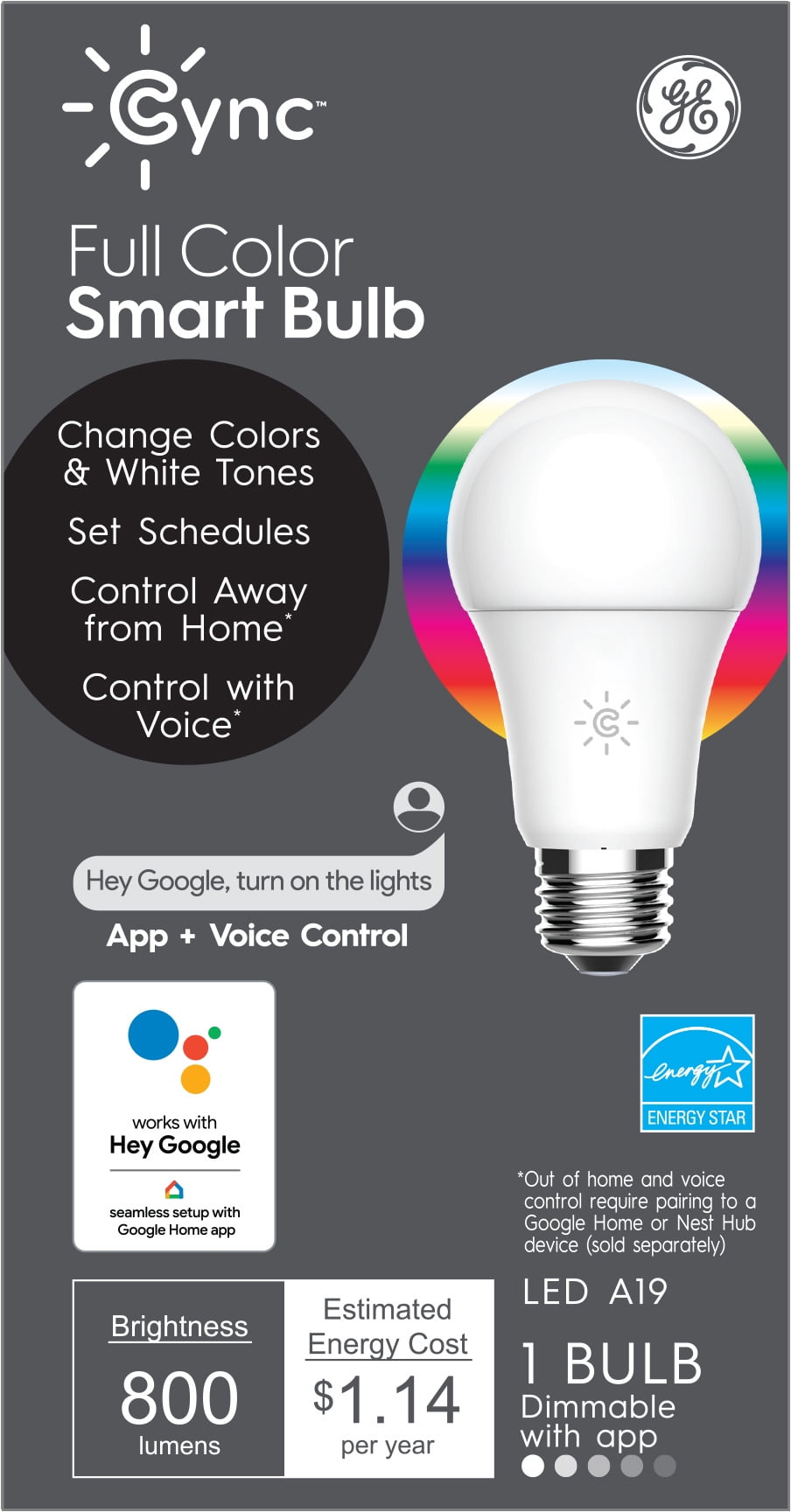
Best Overall: GE CYNC Smart Outdoor
- 15W, 800 to 1,300 lumens
- App and voice control
- Color-changing and scheduling
- Damp-rated, priced $38 to $50
Perfect for tech-integrated homes.
Best Value: Beams MB360XT
- Battery-powered, 200 lumens
- 35-foot motion range
- Installs in 10 minutes
- Priced $12 to $20
Ideal for renters or quick security fixes.
Best Motion Sensor: SANSI 45W
- 6,000 lumens, 50-foot detection
- Daylight sensor with adjustable panels
- Hardwired, priced $46 to $57
Replaces 150W halogen with 70% less energy.
Best for Security: Leonlite 20W
- 1,800 lumens, twin-head design
- 3 modes: Motion, Manual, Dusk-to-Dawn
- Minimal false alarms, priced $34 to $40
Reliable deterrence for large yards.
Best for Pathways: Philips Hue Calla
- 8W, 640 lumens, millions of colors
- IP65 rated with aluminum build
- App-controlled, priced around $137
Premium choice for landscape design.
Best Automatic: Sengled Dusk-to-Dawn
- 1,200 lumens, 5000K daylight
- No app, no wiring, just screw in
- Around $14 for a 3-pack
Simple, reliable overnight lighting.
Frequently Asked Questions About Outdoor Flood Light Bulb Types
What is the most energy-efficient outdoor flood light bulb type?
LED flood lights are the most energy-efficient option, converting up to 90% more energy into light than halogen bulbs. A 10W LED can match the brightness of a 100W halogen, dramatically reducing electricity costs.
How long do LED flood light bulbs last?
Quality LED flood lights can last up to 50,000 hours, which translates to roughly 17 years of use at 8 hours per night. This far exceeds halogen (2,000 to 5,000 hours) and incandescent (under 1,000 hours).
Are solar flood lights bright enough for security?
Most solar flood lights produce under 1,000 lumens, making them suitable for pathways, gardens, and accent lighting but generally too dim for primary security purposes. For reliable security lighting, choose hardwired LED fixtures with higher lumen outputs.
What IP rating do I need for outdoor flood lights?
For general outdoor use exposed to rain, choose fixtures rated IP65 or wet-rated. Damp-rated fixtures are acceptable only when installed under cover, such as on porches or under eaves.
Can I replace halogen flood bulbs with LED?
Yes, most LED flood light bulbs use standard screw-in bases compatible with existing halogen fixtures. Check the wattage equivalence to ensure the LED provides comparable brightness. A 10W LED typically replaces a 100W halogen.
What color temperature is best for outdoor security lighting?
Cool white or daylight color temperatures (5,000K and above) are best for security lighting because they provide sharp visibility and accurate color rendering. Warm white (2,700K) is better suited for ambient patio or landscape lighting.
Key Takeaways for Choosing Outdoor Flood Light Bulb Types
LED technology stands as the clear winner for most outdoor flood lighting applications, offering unmatched efficiency, longevity, and smart capabilities. Halogen, HPS, and solar options still serve specific niche roles, but LED is the best all-around investment for both residential and commercial users.
Match your bulb choice to the space, activation method, and desired features. Whether you need motion-triggered security, colorful landscape ambiance, or hands-free dusk-to-dawn operation, there is an LED flood light designed for the job. With proper selection and basic maintenance, your outdoor lighting will provide years of reliable performance, enhanced safety, and reduced energy costs.