
A burned-out flood light bulb sitting on your workbench might seem harmless, but tossing it in the trash can introduce toxic materials into landfills and water supplies. Knowing how to dispose of flood light bulbs correctly protects your family, sanitation workers, and the environment. The rules vary depending on whether you have halogen, LED, metal halide, or high-pressure sodium bulbs.
This guide walks you through identifying your bulb type, following local regulations, finding recycling drop-off points, and handling broken bulbs safely. You will also learn common mistakes to avoid and how to store used bulbs until you can recycle them.
Identify Your Flood Light Bulb Type

Before you can dispose of any bulb, you need to know exactly what you are dealing with. Different flood light technologies contain different materials, and some are classified as hazardous waste.
Halogen and Incandescent Flood Bulbs
These traditional bulbs use a tungsten filament sealed inside a glass envelope filled with halogen gas. They do not contain mercury, which makes them less risky than other types. Many municipalities allow you to throw them away in household trash, but you should still wrap them in paper or place them in their original box to protect sanitation workers from sharp glass.
Metal Halide and High-Pressure Sodium Bulbs
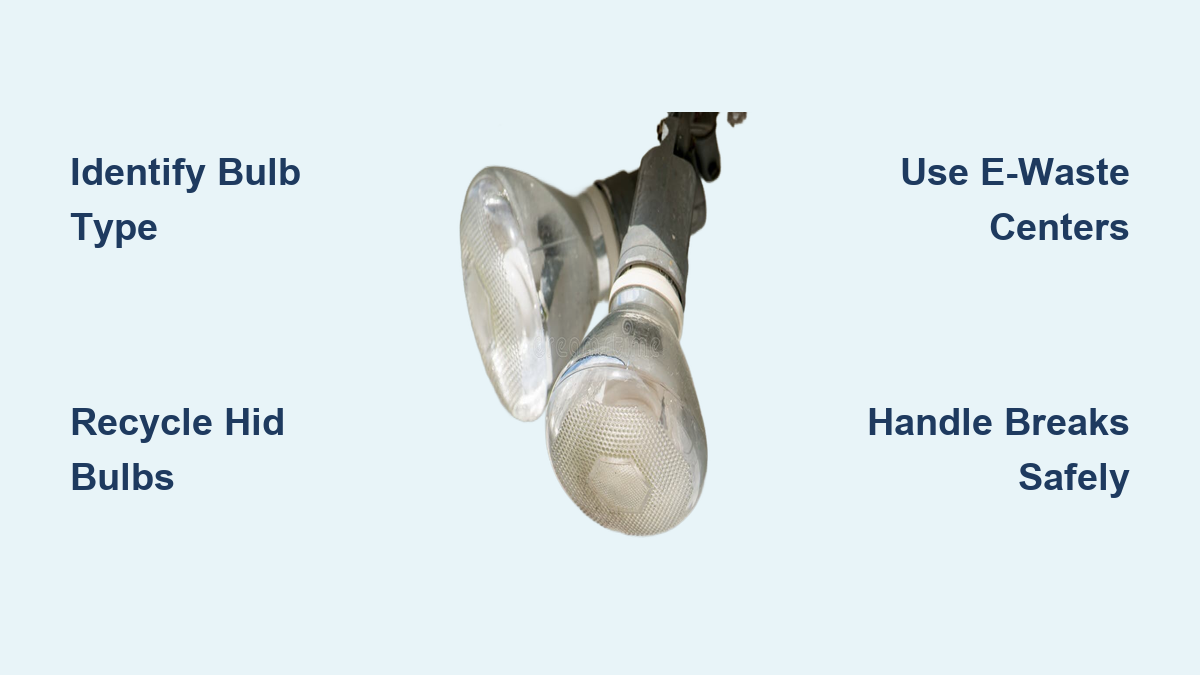
You will often find these high-intensity discharge (HID) bulbs in stadiums, parking lots, streetlights, and large commercial spaces. They contain mercury and other heavy metals that can contaminate soil and groundwater if they break in a landfill. In most regions, the law requires you to recycle them through a certified hazardous waste program.
LED Flood Light Bulbs
LED flood lights are energy-efficient and built to last for years. They do not contain mercury, but they do include circuit boards, semiconductors, and small amounts of metals like lead and arsenic. Most manufacturers and recycling centers recommend sending old LEDs through an e-waste program rather than the trash.
Check Local Disposal Regulations Before You Act
Bulb disposal laws are not the same everywhere. What is legal in one city may be banned in another, so always confirm your local rules first.
Search Your Municipality’s Waste Guidelines
Open your city or county waste management website and search for terms like “light bulb disposal” or “household hazardous waste.” Most sites list accepted bulb types, drop-off locations, and special collection events for residents.
Call Your Waste Hauler Directly
If the website is unclear, pick up the phone and call your trash or recycling provider. Ask whether your bulb type is allowed in curbside trash, whether they offer hazardous waste pickup, and where the nearest certified drop-off site is located.
Recycle HID Bulbs Through Certified Programs
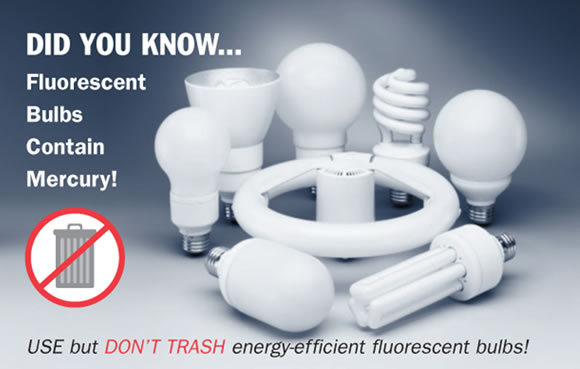
Metal halide and high-pressure sodium bulbs require special handling because of their mercury content. Even a single broken bulb can release enough mercury to contaminate a small water supply.
Use Retail Drop-Off Programs When Available
Some home improvement stores accept certain bulbs for recycling, though most focus on CFLs and LEDs rather than HID lamps. Stores like Home Depot, Lowe’s, and IKEA may take specific bulb types, but policies vary by location. Call ahead and ask which bulbs they accept, whether there is a daily limit, and if the service is free.
Locate a Certified Hazardous Waste Facility
For HID bulbs, you need a facility licensed to handle mercury-containing waste. These centers use specialized equipment to extract mercury and other toxins safely.
Use Online Recycling Locators
Websites like Earth911 and Call2Recycle let you enter your ZIP code and search for nearby drop-off points. Your state’s environmental protection agency website is another reliable source for finding certified recyclers in your area.
Recycle LED Bulbs Through E-Waste Channels
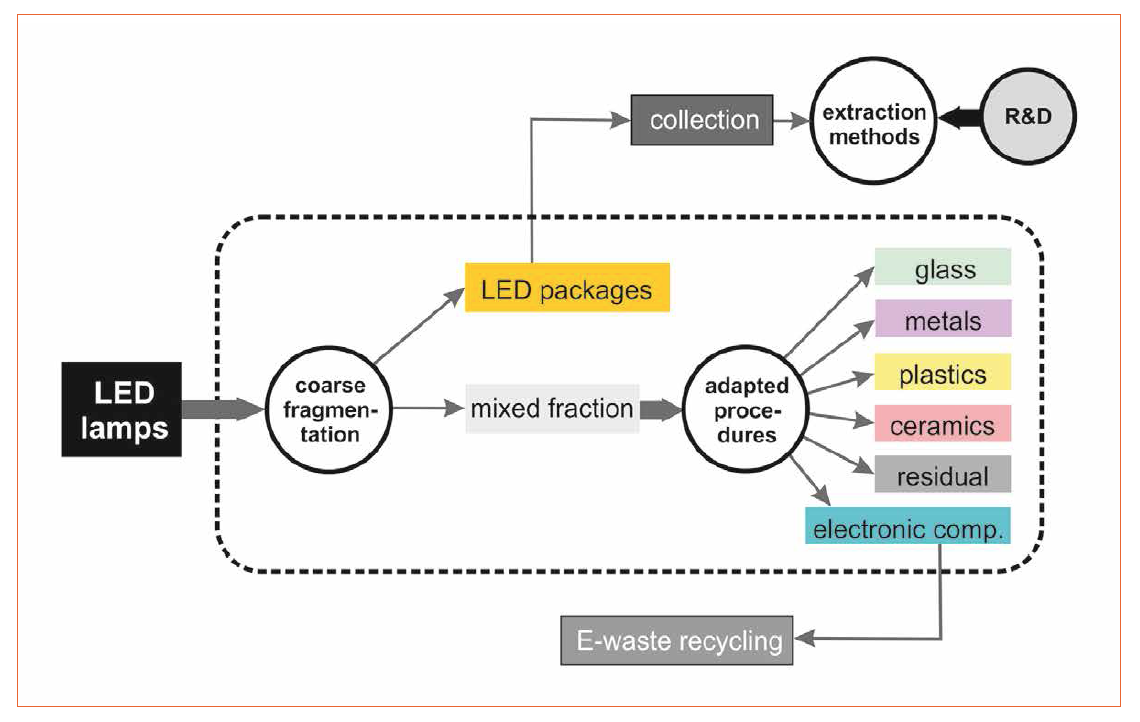
LED flood bulbs may not be toxic, but their electronic components still belong in an e-waste stream rather than a landfill.
Find a Local E-Waste Recycling Center
Search for facilities that accept consumer electronics. Many of these centers take LED bulbs alongside computers, phones, and televisions. Some charge a small per-bulb fee, and a few require you to remove the bulb from its fixture before drop-off.
Attend Community E-Waste Collection Events
Cities and counties frequently host seasonal collection days where residents can drop off electronics and hazardous materials for free. Check your local government calendar or subscribe to waste alerts so you never miss an event in your area.
Handle Broken Flood Light Bulbs with Care
A broken mercury-containing bulb is a serious situation. Quick, careful action can limit your exposure and prevent contamination.
Ventilate the Area Immediately
Open windows and doors, then leave the room for at least 10 to 15 minutes. Turn off your HVAC system so mercury vapor does not spread through your ductwork into other rooms.
Clean Up Without a Vacuum or Broom
Vacuuming or sweeping spreads mercury particles into the air. Instead, follow these steps:
- Put on gloves and closed-toe shoes
- Use stiff paper or cardboard to scoop up large glass pieces
- Press sticky tape against the floor to pick up fine fragments
- Wipe the area with a damp paper towel
- Seal all debris and cleaning materials in a glass jar or plastic bag
Dispose of Cleanup Materials as Hazardous Waste
Never throw broken bulb debris into your trash or recycling bin. Take the sealed bag or jar directly to a hazardous waste facility for proper treatment.
Avoid These Common Disposal Mistakes
Even careful homeowners make errors that put people and the environment at risk. Watch out for these pitfalls.
Mistake: Throwing HID Bulbs in the Trash
When metal halide and high-pressure sodium bulbs are crushed in a garbage truck or landfill, they release mercury that can leach into water supplies. Always recycle them through a certified channel.
Mistake: Assuming All Bulbs Follow the Same Rules
LEDs, halogens, and HID bulbs each have different disposal requirements. Check the label or original packaging before deciding how to get rid of any bulb.
Mistake: Breaking Bulbs Before Disposal
Some people crush old bulbs to save space, but breaking a mercury-containing bulb releases toxic vapor. Even breaking a halogen bulb creates sharp glass hazards. Always keep bulbs intact until you reach a recycling center.
Store Used Bulbs Safely Until You Can Recycle
If you cannot get to a drop-off location right away, store your used bulbs in a way that prevents breakage and accidental exposure.
Keep Bulbs in Their Original Packaging
The box or tube your bulb came in is designed to protect it from impact. Storing used bulbs in the same packaging also helps you remember the type when you are ready to recycle.
Label Mercury-Containing Bulbs Clearly
Use a permanent marker to write “Contains Mercury – Recycle Only” on HID bulbs. This prevents anyone in your household from accidentally throwing them in the trash.
Store in a Cool, Dry Location
Avoid garages, sheds, or attics where temperature swings can weaken glass and seals. A climate-controlled closet or indoor storage bin is a safer choice.
Reduce Waste by Choosing Better Bulbs
Smart disposal is only part of responsible lighting use. You can shrink your environmental footprint even further with the right buying habits.
Pick Brands with Take-Back Programs
Some manufacturers accept used bulbs by mail or through partner retailers. Look for brands that design their products for easy recycling and offer free return options.
Switch to Long-Lasting LED Flood Lights
Modern LEDs use less energy and last far longer than halogen or HID bulbs. While they still need proper disposal, their longer lifespan means fewer bulbs end up in the waste stream overall.
Track Installation and Replacement Dates
Keep a simple log of when you install each flood light. Knowing the expected lifespan helps you plan replacements and recycling trips in advance, so you never end up with a pile of mystery bulbs in your garage.
Frequently Asked Questions About Flood Light Bulb Disposal
Can I throw flood light bulbs in the regular trash?
It depends on the bulb type. Halogen and incandescent bulbs are often allowed in household trash, but metal halide, high-pressure sodium, and many LED bulbs must be recycled. Always check your local waste rules before tossing any bulb.
Where can I recycle metal halide flood light bulbs?
Take them to a certified hazardous waste facility or a recycling center that handles mercury-containing lamps. Use online locators like Earth911 or contact your state’s environmental agency to find the closest drop-off site.
Are LED flood light bulbs hazardous waste?
LEDs do not contain mercury, but they do include electronic components and trace metals. Most recycling experts recommend sending them through an e-waste program rather than the trash.
What should I do if a metal halide bulb breaks?
Ventilate the room immediately, leave for 10 to 15 minutes, and turn off your HVAC system. Clean up with gloves, stiff cardboard, and sticky tape. Never use a vacuum. Seal all debris and take it to a hazardous waste facility.
Do Home Depot and Lowe’s recycle flood light bulbs?
Some locations accept CFLs and LEDs, but most do not take HID bulbs like metal halide or high-pressure sodium. Call your local store to confirm which bulb types they accept.
How should I store used bulbs before recycling?
Keep them in their original packaging, label any mercury-containing bulbs clearly, and store them in a cool, dry place away from temperature swings. This prevents breakage and accidental exposure until you can drop them off.
Key Takeaways for Safe Flood Light Bulb Disposal
Disposing of flood light bulbs the right way comes down to three simple habits. First, always identify your bulb type before deciding how to throw it away. Second, follow your local regulations and use certified recyclers for HID and LED bulbs. Third, handle broken bulbs with extreme care and never use a vacuum to clean them up.
Your next step is simple. Check the flood lights around your home and property right now, identify their types, and locate the nearest recycling drop-off site. Store any used bulbs safely until you can take them in. A few minutes of preparation keeps toxic materials out of landfills and protects your community for years to come.