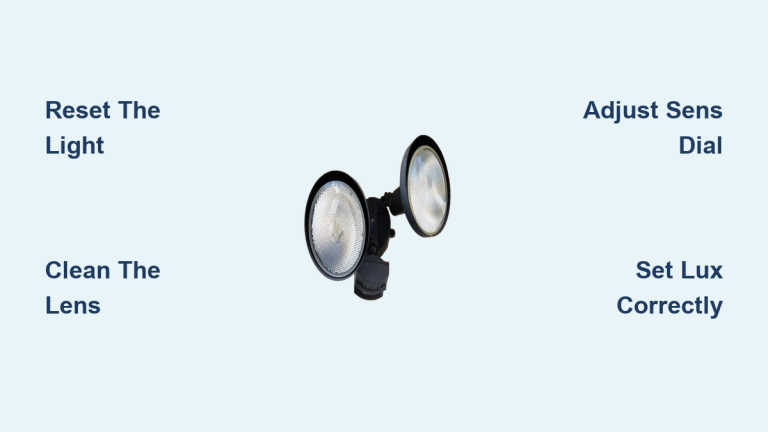
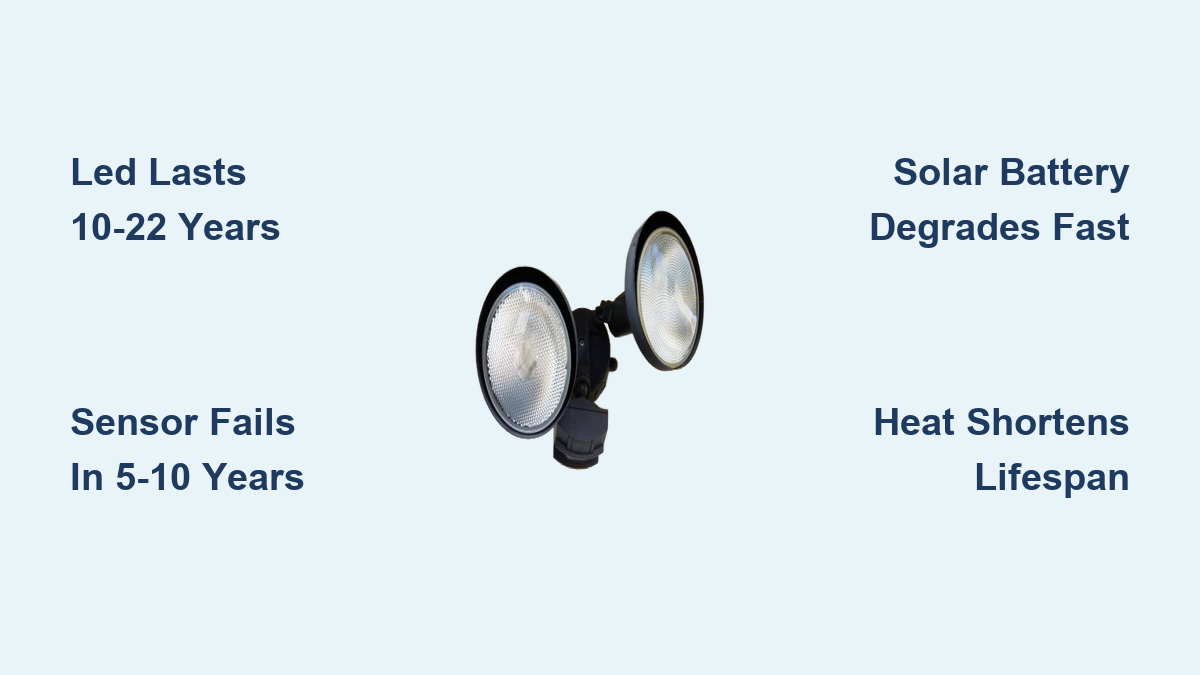

If you’ve installed motion sensor flood lights to protect your home or business, you’re probably wondering when you’ll need to replace them. The answer depends on which part you ask about. The LED bulb can shine for 10 to 22 years, but the motion sensor and driver electronics usually fail first, giving you 5 to 10 years of reliable service before something needs attention. Understanding this split helps you plan replacements, budget for maintenance, and choose fixtures that actually deliver on their promises. This guide covers realistic lifespans, why cheap models fail early, and proven ways to extend the life of your motion lights.
LED Lifespan: The 10–22 Year Light Source

Modern motion flood lights use LED technology, which dramatically outlasts older bulbs. But the exact number depends on quality and operating conditions.
Standard vs. Premium LED Ratings
Most LED flood lights carry ratings between 25,000 and 50,000 hours. At typical residential use of 3–4 hours per night, that works out to 10 to 20 years of service. Premium outdoor models push this further, advertising 50,000 to 100,000 hours, which translates to 11 to 22 years under normal conditions.
Why LEDs Beat Traditional Bulbs
Older lighting technologies suffer from frequent switching, which is exactly what motion sensors cause:
- Incandescent bulbs last only 1,000 hours because thermal stress destroys the filament during each on/off cycle.
- Halogen flood lights manage 2,000 to 4,000 hours.
- CFL and fluorescent bulbs reach about 10,000 hours, but cheap ballasts wear out after roughly 10,000 start cycles.
- Metal halide fixtures last 6,000 to 15,000 hours and are common in commercial settings.
LEDs handle motion-triggered cycling without any lifespan penalty. They can switch thousands of times per second with zero degradation, making them ideal for sensor-activated use.
Sensor and Electronics: The 5–10 Year Limiting Factor
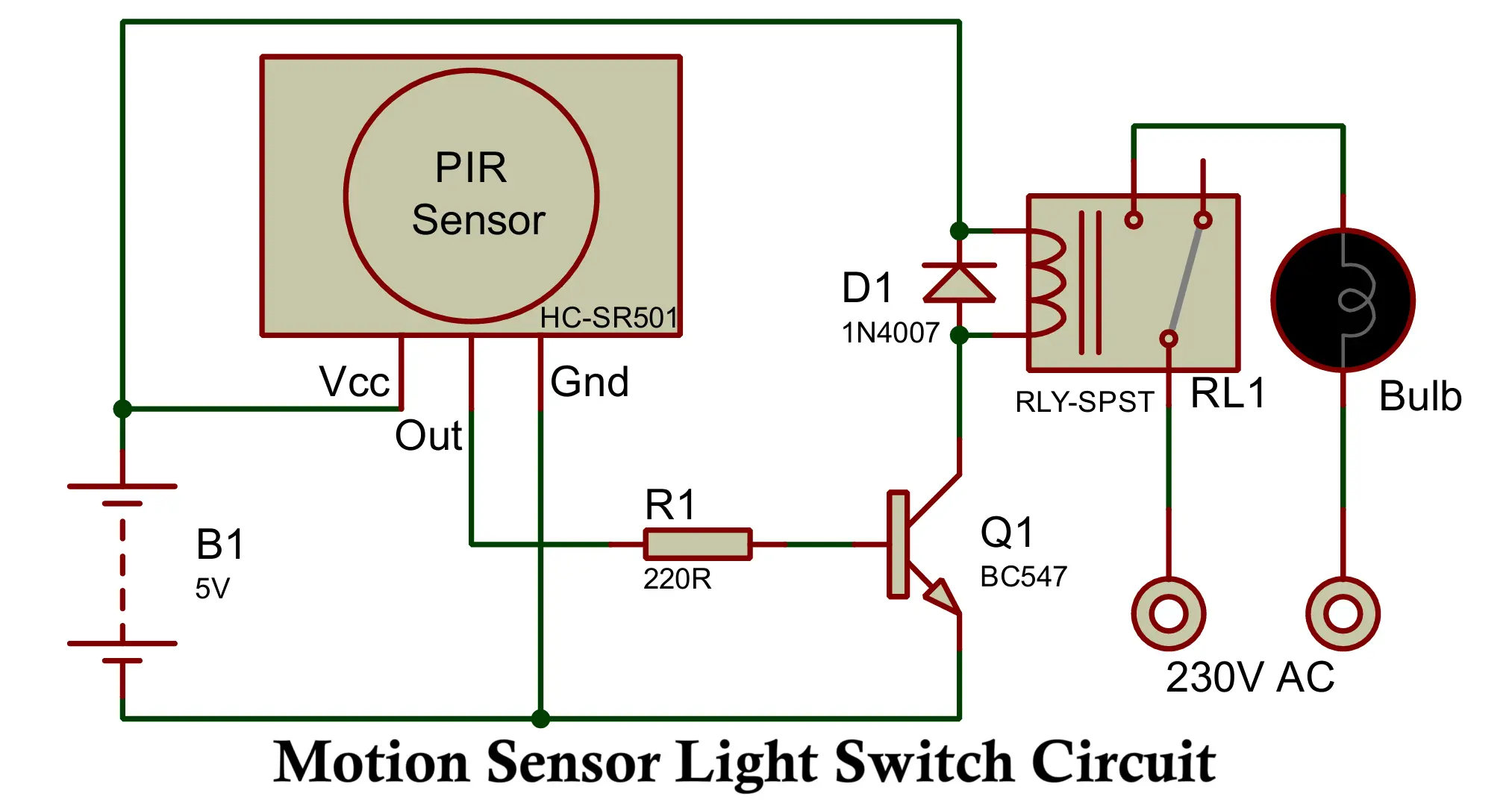
Even if your LED chip lasts two decades, the motion sensor and driver circuit typically fail first. This is the real-world bottleneck for most users.
Typical Sensor Failure Window
Manufacturers rate motion detection systems for 5 to 10 years of reliable operation. Common failure symptoms include:
- Reduced sensitivity or false triggers
- Delayed response times
- Complete failure to activate
These issues usually stem from electronic drift, moisture damage, or low-quality components rather than the LED itself.
Driver Circuits: The Hidden Weak Point
The driver regulates power flowing to the LED. In budget fixtures, it’s often the first component to fail because of:
- Overheating from poor thermal design
- Voltage spikes from unstable power
- Inferior capacitors that degrade quickly
A failed driver causes flickering, dimming, or total blackout even when the LED chip is still perfectly functional.
Solar vs. Wired Flood Lights: A Major Lifespan Gap
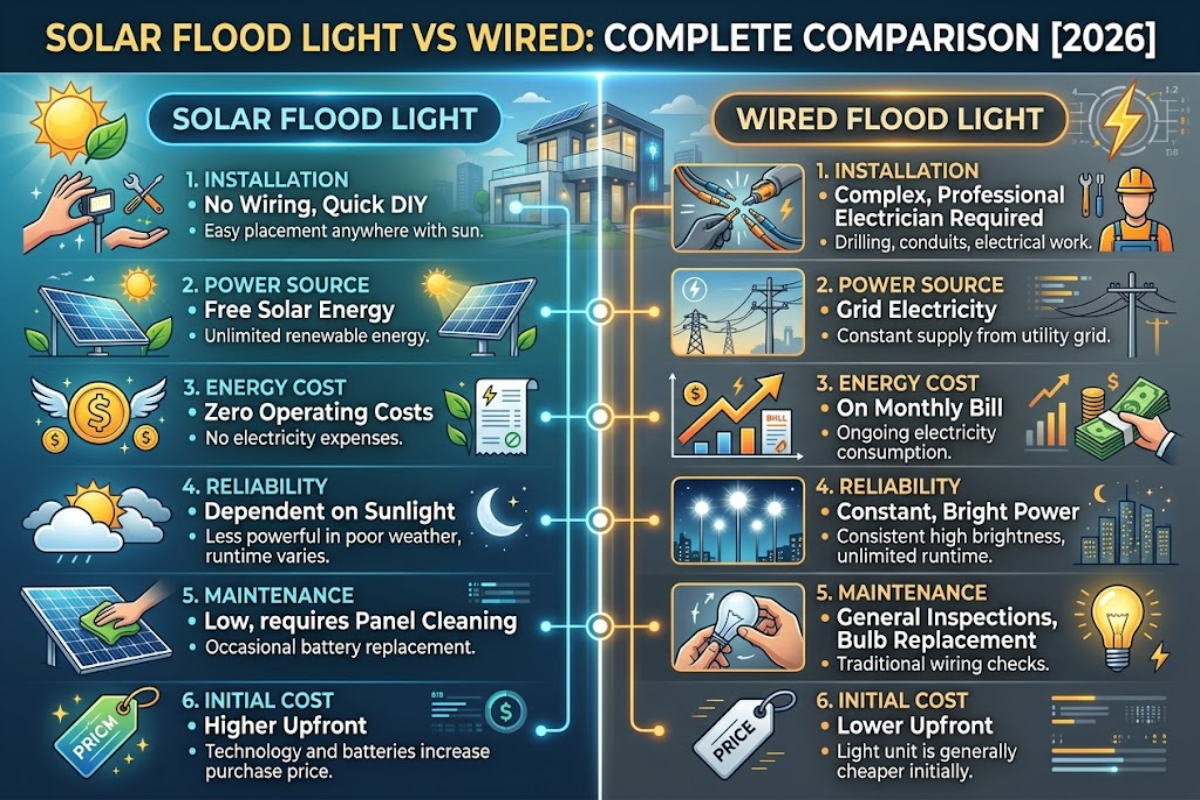
Your power source dramatically changes how long your motion light will last.
Solar-Powered Models: 1–8 Years
Solar lights face unique limitations:
- Battery degradation is the primary killer. Rechargeable batteries last 1 to 3 years, and non-replaceable batteries end the unit’s useful life entirely.
- Solar panels can last 10+ years, but output gradually drops over time.
- LED longevity matches wired models at 50,000+ hours, but aging batteries underpower the system.
- Build quality varies wildly, and many budget models fail within 1–2 years.
High-end solar lights with user-replaceable batteries can reach 5 to 8 years. Cheap models often die within 1 to 2 years due to battery or driver failure.
Wired LED Flood Lights: 10–22 Years
Grid-powered units benefit from stable voltage, no battery limitations, and typically better thermal management. With proper installation, these lights deliver decades of service, limited mainly by environmental exposure or power surges.
Key Factors That Shorten Lifespan
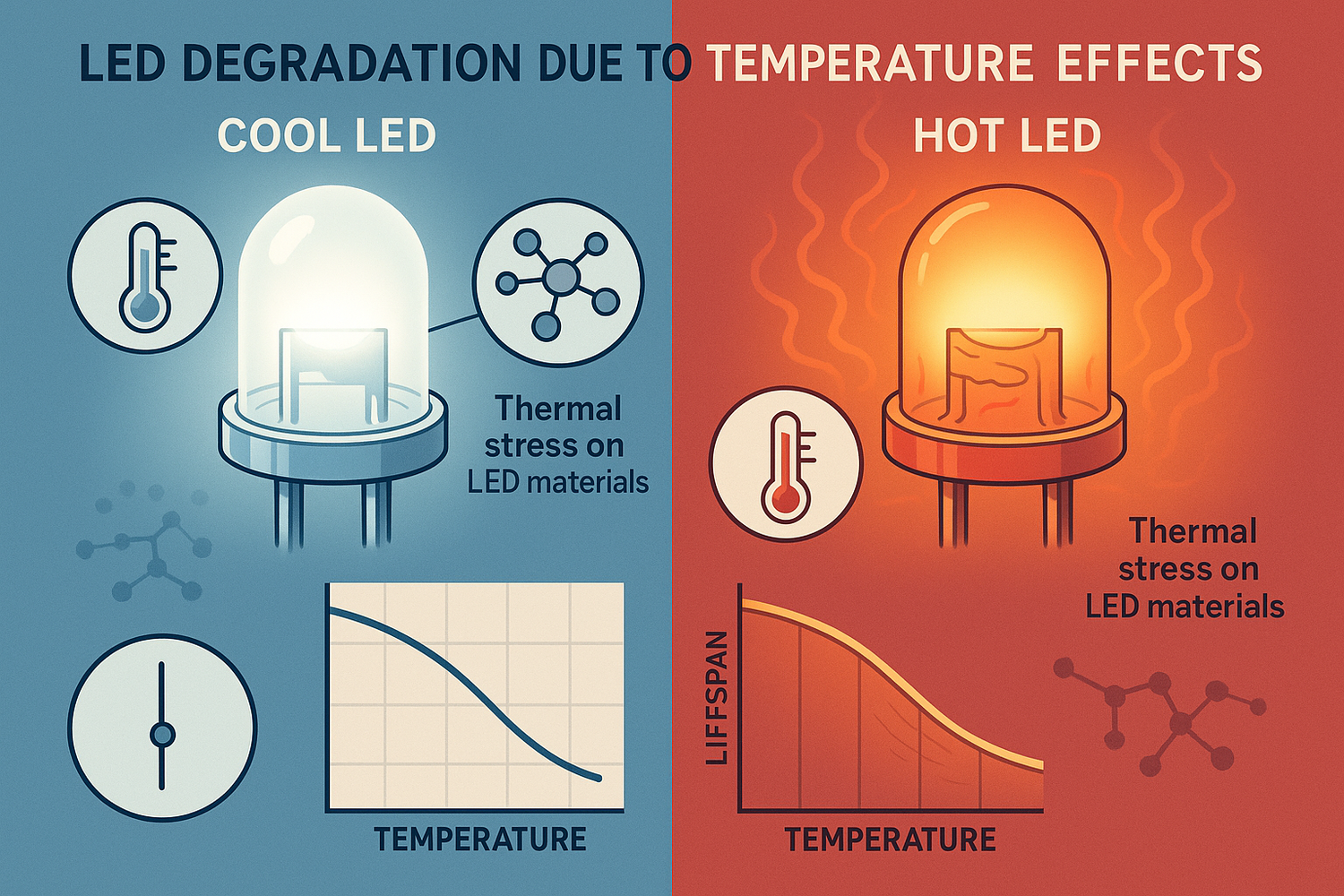
Even quality flood lights fail early under poor conditions. Here’s what cuts their life short.
Heat Is the #1 Enemy
High operating temperatures accelerate LED degradation faster than almost anything else:
- At 65°C, an LED may last 50,000 hours
- At 85°C, that drops to just 25,000 hours
- A 10°C rise in junction temperature can halve the lifespan
- Phosphor conversion efficiency can drop by up to 13% with temperature increases
Install lights in shaded areas, choose models with visible aluminum heatsinks, and avoid enclosing fixtures in tight spaces that trap heat.
Poor Component Quality
Low-cost brands often cut corners on:
- Fire-resistant housing materials
- Surge protection circuits
- Stable driver components
- Weatherproof seals at IP65 or higher
Units from third-party sellers without UL or CE certification frequently fail within a year due to subpar engineering.
Environmental Damage
Outdoor lights face constant assault from the elements:
- Moisture causes corrosion and short circuits
- Dust blocks sensors and insulates heatsinks
- UV exposure cracks plastic housings over time
- Temperature swings stress internal components and seals
Look for IP65 or IP66 ratings to ensure dust and water resistance.
Warning Signs Your Flood Light Is Failing
LEDs don’t burn out suddenly; they degrade gradually. Watch for these signals before complete failure.
Dimming (Lumen Depreciation)
When brightness drops below 70% of original output (the L70 standard), the fixture should be replaced. The area will feel noticeably darker, reducing your security coverage.
Flickering or Intermittent Operation
Common causes include:
- Failing driver circuit
- Loose wiring connections
- Moisture infiltration
- Sensor malfunction
Pro Tip: Test the fixture by bypassing the sensor. If it works manually, the sensor or control board is likely faulty rather than the LED.
Color Shift to Yellow or Amber
As phosphor coatings degrade, white light turns yellow or amber. This usually indicates the LED is aging or has been exposed to excessive heat.
Premature Failure Under 6 Months
If a light dies within months, the cause is almost certainly a defective driver, poor build quality, or a voltage surge during installation. This is not normal; return or replace the unit immediately.
How to Extend Your Flood Light’s Life
Simple maintenance and smart installation choices can add years to your fixture’s service life.
Clean Lights Every 6 Months
Dirt on lenses and sensor windows blocks motion detection, traps heat, and reduces brightness. Follow these steps:
- Turn off power to the fixture
- Wipe the lens and sensor window with a soft, damp cloth
- Remove dust from heatsink fins
- Clear spider webs or debris blocking the field of view
Inspect for Damage Annually
Check for cracked housing, rust or corrosion, water inside the fixture, and loose mounting hardware. Replace damaged gaskets and seals to maintain weather resistance.
Install with Longevity in Mind
Best practices include:
- Mounting in partial shade to reduce heat buildup
- Using surge protectors on wired models
- Choosing fixtures with visible aluminum heatsinks
- Avoiding over-tightened screws that crack housing
For solar models, position panels for maximum sun exposure and replace batteries every 2–3 years before they fail completely.
What Warranty Claims Really Mean

Don’t trust advertised lifespans at face value. There’s often a major gap between marketing and reality.
Advertised vs. Actual Warranty
- Claimed lifespan: “100,000 hours” or “25 years”
- Actual warranty: Often just 1 year, even on long-life claims
Reputable brands like Noribachi or Philips offer 5-year warranties backed by real-world testing and quality components.
What to Look for When Buying
Key features that indicate quality:
- UL or CE certification for safety standards
- IP65 rating or higher for weather resistance
- Visible heatsink for thermal management
- Replaceable battery on solar models
- 5-year warranty minimum
Avoid no-name brands advertising “50,000 hours” while offering only a 6-month warranty.
Final Verdict: Realistic Lifespan Expectations

Here’s what you can actually expect from different types of motion sensor flood lights:
| Type | Expected Lifespan | Primary Failure Point |
|---|---|---|
| Wired LED (Quality) | 10–22 years | Driver or sensor |
| Wired LED (Budget) | 3–7 years | Driver or housing |
| Solar (High-End) | 5–8 years | Battery or sensor |
| Solar (Budget) | 1–2 years | Battery or electronics |
With quality components and proper care, your motion sensor flood light should last at least 10 years. Most people replace them earlier due to sensor failures, gradual dimming, or environmental damage.
Frequently Asked Questions About Motion Sensor Flood Lights
Do motion sensors reduce LED bulb lifespan?
No. LEDs are designed to handle frequent on/off cycling without degradation. The myth comes from older bulbs like incandescent and fluorescent, where switching damaged filaments or electrodes. Motion activation actually extends LED life by reducing total operating hours.
What causes motion sensor flood lights to fail prematurely?
The most common causes are poor-quality driver circuits, voltage surges, moisture infiltration, and excessive heat. Lights that fail within 6 months almost always have defective components or inadequate surge protection rather than normal wear.
How do I know when to replace my motion flood light?
Replace the fixture when brightness drops below 70% of original output (the L70 standard), when flickering becomes frequent, when the light color shifts to yellow, or when the sensor stops responding reliably. Most quality units last 10+ years before reaching these thresholds.
Are solar motion lights worth it despite shorter lifespans?
Solar lights make sense for locations without easy wiring access. High-end models with replaceable batteries can last 5–8 years, making them cost-effective for remote areas. Budget solar models typically fail within 1–2 years and are rarely worth the savings.
What’s the difference between IP65 and IP66 ratings?
Both ratings protect against dust and water, but IP66 offers protection against powerful water jets while IP65 only handles water jets from any direction. For most residential outdoor use, IP65 is sufficient. Choose IP66 for areas with heavy rain or direct water exposure.
Can I replace just the LED or sensor instead of the whole fixture?
In some cases, yes. Many quality fixtures have replaceable LED modules or driver boards. However, budget units often have components soldered directly to the main board, making repair impractical. Check your manufacturer’s documentation before attempting repairs.
Key Takeaways for Motion Sensor Flood Light Longevity
The realistic answer to how long motion sensor flood lights last comes down to component quality and environmental conditions. LEDs themselves can shine for 10–22 years, but the sensor and driver electronics typically limit total service life to 5–10 years. Solar models face shorter lifespans due to battery degradation, while wired units benefit from stable power and better thermal management.
To maximize your investment, choose certified fixtures from reputable brands, install them in shaded locations with proper surge protection, and clean them twice yearly. Avoid cheap imports with unrealistic lifespan claims and minimal warranties. With the right approach, your motion sensor flood lights will provide reliable security lighting for well over a decade.